Short answer: Angi can work as a short-term volume source, but for most established contractors the real math, measured in cost per booked job rather than cost per lead, favors building your own demand. Here's how to decide for your business instead of guessing.
What Angi actually sells you
Angi (and similar aggregators) sell leads, not jobs. That distinction is the whole story. You pay for a contact, then you still have to win it. And the way these platforms work creates three problems contractors consistently report.
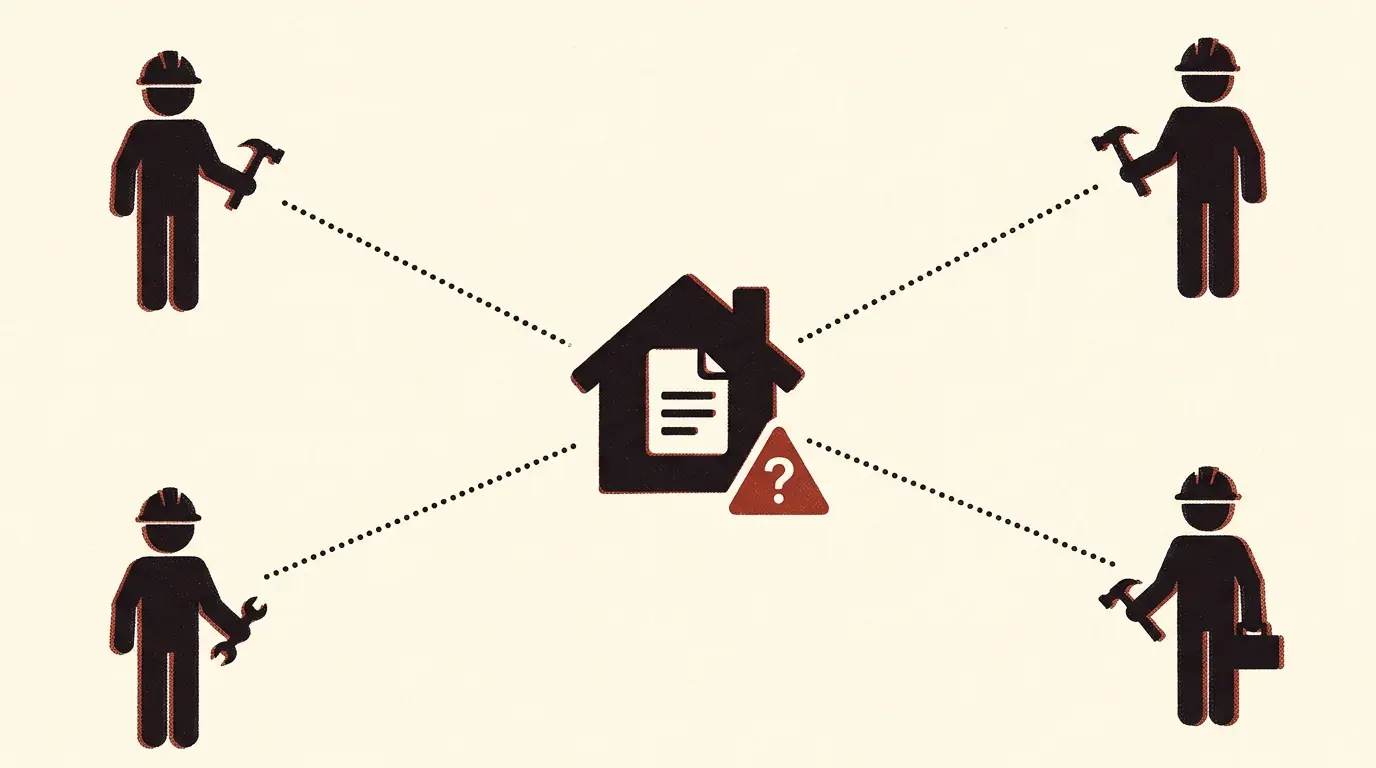
Leads are often shared. The same homeowner is frequently sold to multiple contractors at once. So you are not buying a lead, you are buying a race. Your close rate drops because you are one of three or four calling the same person, which quietly multiplies your true cost per booked job.
Costs feel high and unpredictable. Lead prices climb, and in competitive categories they climb fast. Contractors widely describe the spend as expensive and hard to forecast.
Lead quality varies. Wrong numbers, tire-kickers, and out-of-area requests are common, and disputing them is a hassle.
The number that actually decides it
Cost per lead makes Angi look like one thing. Cost per booked job often makes it look like another. If a shared lead costs you 80 dollars but only closes 1 in 8 because three competitors got it too, your real cost is 640 dollars per booked job, before you count the time chasing the seven that didn't close. Run that comparison honestly using the framework in cost per booked job vs cost per lead.
Do the same for any channel, including Google Ads, where the same trap appears, covered in Google Ads cost per lead for HVAC. The point is not "aggregators bad, ads good." It's "measure cost per booked job and let the number decide."
When Angi can make sense
It's not all downside. Angi can be a reasonable temporary bridge if:
- You are brand new with no website authority, no reviews, and no other pipeline, and you need cash flow while you build owned demand.
- You can answer and respond faster than the other contractors who got the same lead, since speed is the whole game on shared leads.
- You track close rate and cost per booked job and cut it the moment owned channels outperform.
The danger is treating it as permanent infrastructure instead of a bridge.
The better long game
The durable alternative is owned demand, where homeowners find and choose you directly:
- A complete, active Google Business Profile with steady reviews.
- Service pages built for Google and AI search, covered in how home service businesses get found in 2026.
- Strong capture so you actually convert the demand you generate instead of buying it back from an aggregator.
Owned demand is slower to build but cheaper per booked job and, unlike a lead you rent, it compounds. You're building an asset instead of paying rent.
The bottom line
Don't ask "is Angi worth it" in the abstract. Track your real cost per booked job from it, compare it to owned channels, and use it as a bridge at most. The contractors who win long-term own their demand and capture it fast, rather than renting shared leads forever.
Rhemic builds owned visibility and fast capture so you stop renting leads. See how it works or get a free audit.