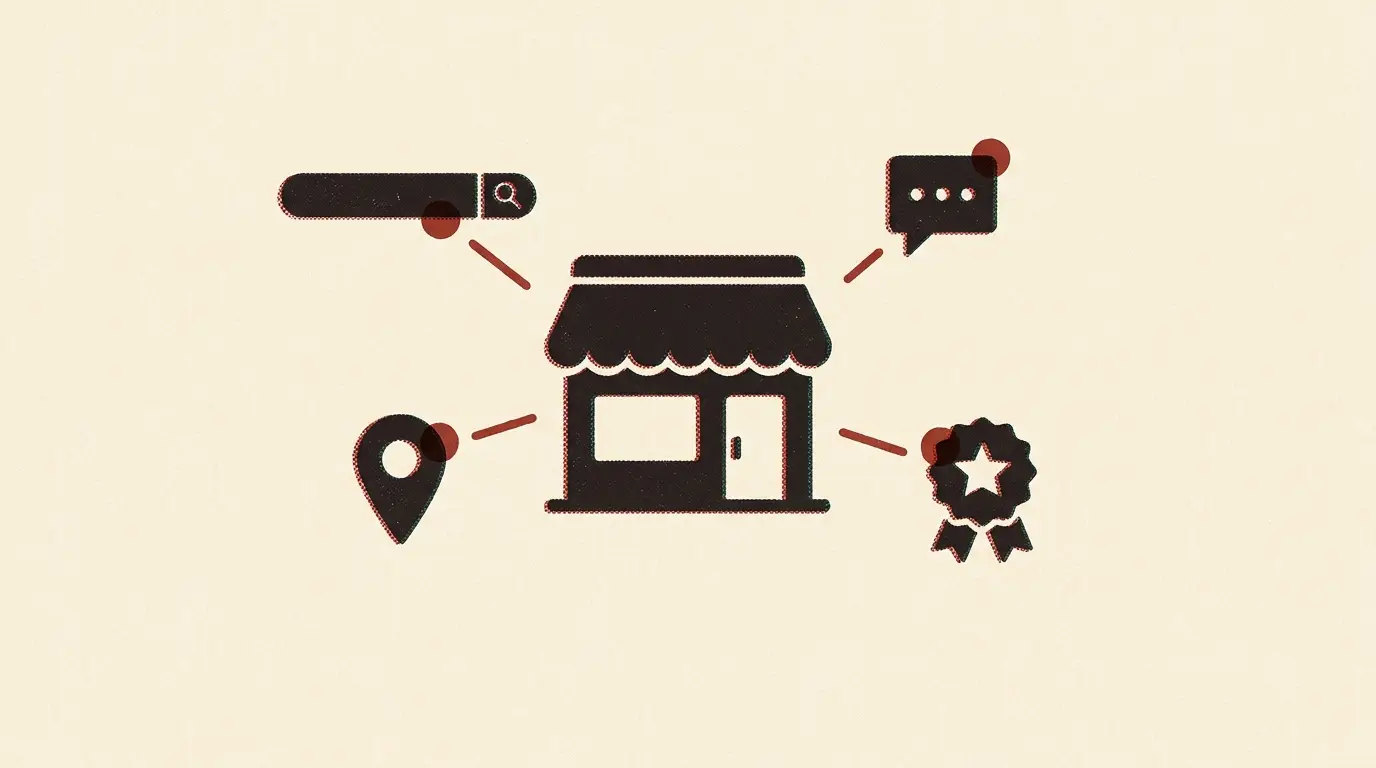
In 2026, a home service business does not get found in one place. It gets found across four surfaces at once: Google search, the map pack, Google's AI Overviews, and AI assistants like ChatGPT and Perplexity. The businesses winning are the ones that understand these are not four separate channels. They are one system, fed by the same foundation.
This is the hub guide. It covers how each surface works, what they share, and the order to fix things. The deeper tactical guides for each piece link out from here.
The discovery layer changed, but the foundation didn't
Two things are true at the same time, and you have to hold both.
First, discovery genuinely shifted. A large and fast-growing share of homeowners now ask an AI assistant for a recommendation instead of scrolling links, especially for urgent and comparison-style jobs. We cover that shift in detail in how homeowners find contractors with AI.
Second, the foundation did not change. Google has been explicit that its AI features are grounded in its core Search systems and that foundational SEO still drives the result. There is no separate "AI SEO" discipline and no magic file you install. AI visibility is an extension of doing the fundamentals well, made legible to machines.
So the correct posture is Google-first, AI-extended. Win classic search and local, and the same work carries you into the AI answers.
The four surfaces, and what each one wants
1. Classic Google search. Still the largest source of local demand by far. Wants relevant, well-structured pages, real authority, and technical health. The base everything else sits on.
2. The map pack and Google Business Profile. For "near me" and local intent, the map pack often outweighs blue links. Wants a complete, accurate, active profile: correct categories, hours, photos, and a steady flow of recent reviews.
3. Google AI Overviews. The AI summary at the top of many searches. Pulls heavily from page-one organic and well-structured content, then synthesizes. Wants clear, answer-first content it can quote and cite.
4. AI assistants (ChatGPT, Perplexity, Gemini). Read the open web, weigh trust, and name a few businesses with reasons. Want machine-readable business data, genuine answers to real questions, and consistent identity across the web. The full playbook is in how to show up in ChatGPT for your trade.
What all four share
Here is the leverage. The same handful of fundamentals feed every surface:
- A complete, active Google Business Profile. Used by the map pack, AI Overviews, and assistants alike.
- LocalBusiness schema on every service page. Tells every engine exactly what you do, where, and when, with no guessing.
- Service pages that answer real questions. What jobs cost, how long they take, what's included. These rank, get cited, and get quoted.
- Consistent name, address, and phone everywhere. Builds the confidence that gets you named and ranked.
- Reviews: volume, recency, sentiment. A trust signal every surface weighs.
Do these once and you improve on all four surfaces at the same time. That is why the smart move is to treat visibility as one system.
Why you can't stop at being found
Getting found is the start of the job, not the end. Every one of these surfaces just hands the homeowner your name and a way to reach you. If the call then goes unanswered, the entire visibility investment converts to nothing. This is the most common and most expensive mistake in the AI era, covered in why you rank but get no calls. And if your business isn't structured for AI to confidently recommend, you are invisible at the exact moment of intent, which is the subject of why home service businesses lose leads to AI answers.
The order to fix things
If you are starting from a normal home service web presence, here is the sequence that compounds fastest:
- Google Business Profile. Complete it, correct it, and get a review engine running. Fastest local impact.
- LocalBusiness schema on every service page. Highest-leverage technical fix for both ranking and AI citation.
- Service pages that answer real questions, with FAQs. Turns pages into the sources engines quote.
- Consistency cleanup. Identical business details across site, profile, and directories.
- Then capture. Make sure every lead these surfaces produce actually gets answered and booked.
The window is open now
The competitive set inside AI answers for most local trades is still thin. Most of your competitors have done none of this. A business that gets structured in the next 90 days holds a position that gets harder to displace as AI usage grows. The cost of waiting is not zero. It is every lead that goes to the competitor who moved first.
Rhemic makes home service businesses the one found and recommended across Google and AI, then captures the lead when it comes in. See how it works or get a free visibility audit.