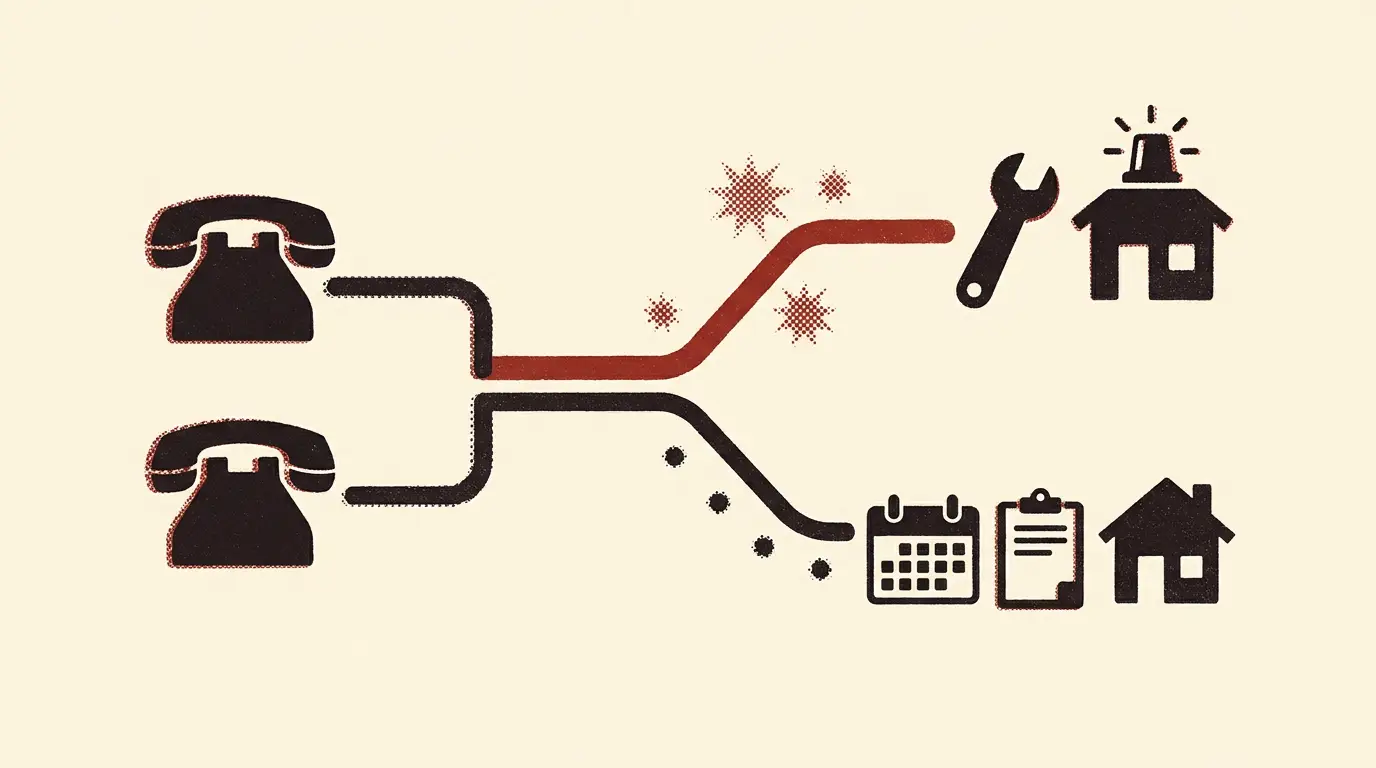
Emergency calls are the best and most fragile leads a home service business gets. Highest value, highest intent, and the most likely to vanish if you don't respond right. Handling them well isn't just about answering, it's about triage: getting the right response to the right call, fast. Here's how.
Why emergencies are different
A homeowner with a burst pipe, no heat, a sparking panel, or a tree on the roof isn't shopping. They need help now, and they'll call until someone responds. That makes emergency calls:
- High value. Urgent work commands premium pricing and often leads to bigger follow-on jobs.
- High intent. They want to book immediately.
- Highly abandoned. If you don't answer, they're gone in seconds to the next company, because they can't wait.
And they come at the worst times, nights, weekends, during storms, when you're least staffed. The after-hours dimension is covered in after-hours answering for plumbers and HVAC.
The triage mindset
The mistake is treating every call the same, either everything is a fire drill or everything waits. Triage is the middle path: quickly sort each call by urgency and respond accordingly.
- True emergency (active damage, safety risk, no heat in winter): immediate response, dispatch or fast callback from an on-call tech.
- Urgent but not critical (a problem that can wait hours, not days): same-day or next-morning booking.
- Routine (quotes, maintenance, non-urgent repairs): book at a convenient time.
Good triage means emergencies get the fast response they demand, while routine calls get captured and scheduled without burning out your team on false alarms.
The handling sequence
For every call, especially emergencies:
- Answer fast. Within a few rings, including after hours. A system, not hope. The full capture stack is in stop losing leads to missed calls.
- Triage quickly. A few questions to gauge urgency and the nature of the problem.
- Route accordingly. Dispatch or escalate true emergencies; book the rest.
- Confirm and reassure. Tell them what happens next and when. A panicked homeowner who feels handled stays yours.
How to cover it without staffing all night
You can't have a senior tech by the phone 24/7, and you don't need to. The practical setup:
- An AI receptionist or answering layer answers every call around the clock, triages, and books routine work.
- Clear escalation rules route genuine emergencies to an on-call person immediately.
- Missed-call text back as a safety net so nothing dead-ends.
This gives you real emergency coverage at a fraction of the cost of overnight staffing, and it scales when a storm sends ten emergency calls at once.
The bottom line
Emergency calls are your highest-value, most time-sensitive leads, and triage is how you handle them right: answer fast, sort by urgency, dispatch or book accordingly, and confirm. Set up 24/7 answer coverage with clear escalation, and you'll win the emergency jobs competitors lose to voicemail, without burning out your crew.
Rhemic answers, triages, and escalates every emergency call around the clock. See how it works or get a free audit.