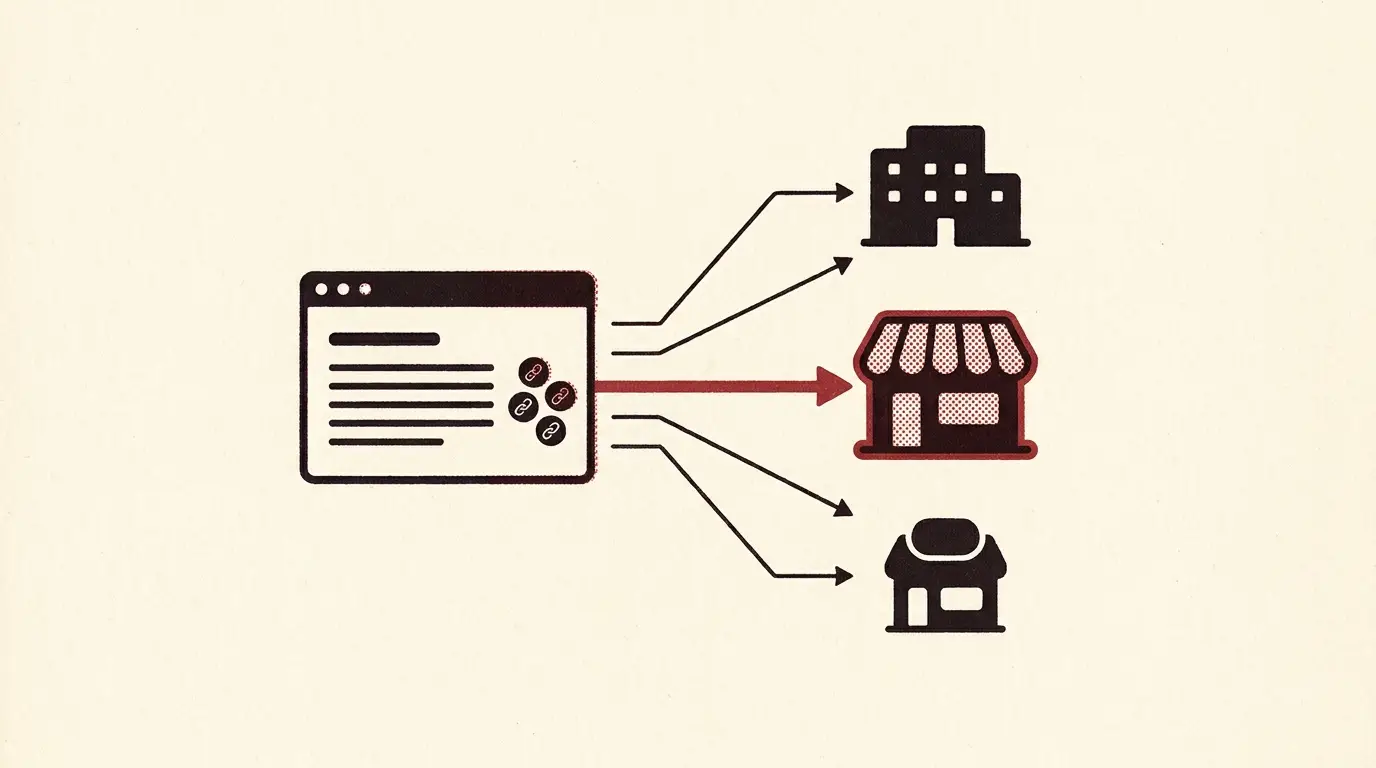
Perplexity, ChatGPT, and similar assistants don't return ten links and let the user sort it out. They read the web, decide which businesses they're confident about, and name a few with citations. Getting into that short list is the new visibility game. Here's how they actually decide.
What these engines do under the hood
For a query like "best emergency electrician near me," an answer engine roughly:
- Reads relevant sources across the open web in real time.
- Weighs trust and relevance, which sources clearly answer the question and seem credible.
- Synthesizes an answer and names or cites a few businesses, usually with links.
Perplexity in particular is built around citing sources, so being a clear, trustworthy, linkable source is the whole battle. The platform-specific playbook for ChatGPT is in how to show up in ChatGPT for your trade; the principles below apply across all of them.
What makes a business get picked
Three things drive the decision, and all are in your control:
Clarity. Can the engine tell exactly what you do, where, and when? Machine-readable business data via LocalBusiness schema removes the guesswork. Vague sites get skipped for clear ones.
Trust. Consistent business identity across your site, profile, and directories, plus strong, recent reviews. The engine wants to recommend a business it's confident about, and confidence comes from corroboration.
Relevance. Content that directly answers the query. A page that clearly addresses "emergency electrician, this area, this service, here's what to expect" is more citable than a generic homepage. The page-craft for this is in how to get your service page cited in AI answers.
Why you don't need a strategy per engine
It's tempting to think each assistant needs its own playbook. It doesn't. Perplexity, ChatGPT, Gemini, and Google AI Overviews share the same needs: clear, machine-readable, trustworthy, relevant content. Optimize once for clarity and trust, and you improve across all of them. Chasing engine-specific hacks is wasted effort, especially since they change constantly while the fundamentals don't.
The opportunity for local businesses
Here's the encouraging part. Most local service businesses have done none of this, so the bar to get cited is low right now. A business with clean schema, clear answer-first pages, consistent data, and good reviews stands out immediately to these engines. The competitive set is thin and the window is open, but it's filling as more businesses catch on.
The bottom line
Perplexity and AI assistants pick businesses that are clear, trustworthy, and relevant, then cite them. Make your business machine-readable, keep your identity consistent, earn reviews, and answer real questions directly. Do that and you become one of the few names the AI recommends, no per-engine trickery required.
Rhemic structures local businesses to be understood, trusted, and cited across every AI assistant. See how it works or get a free audit.